
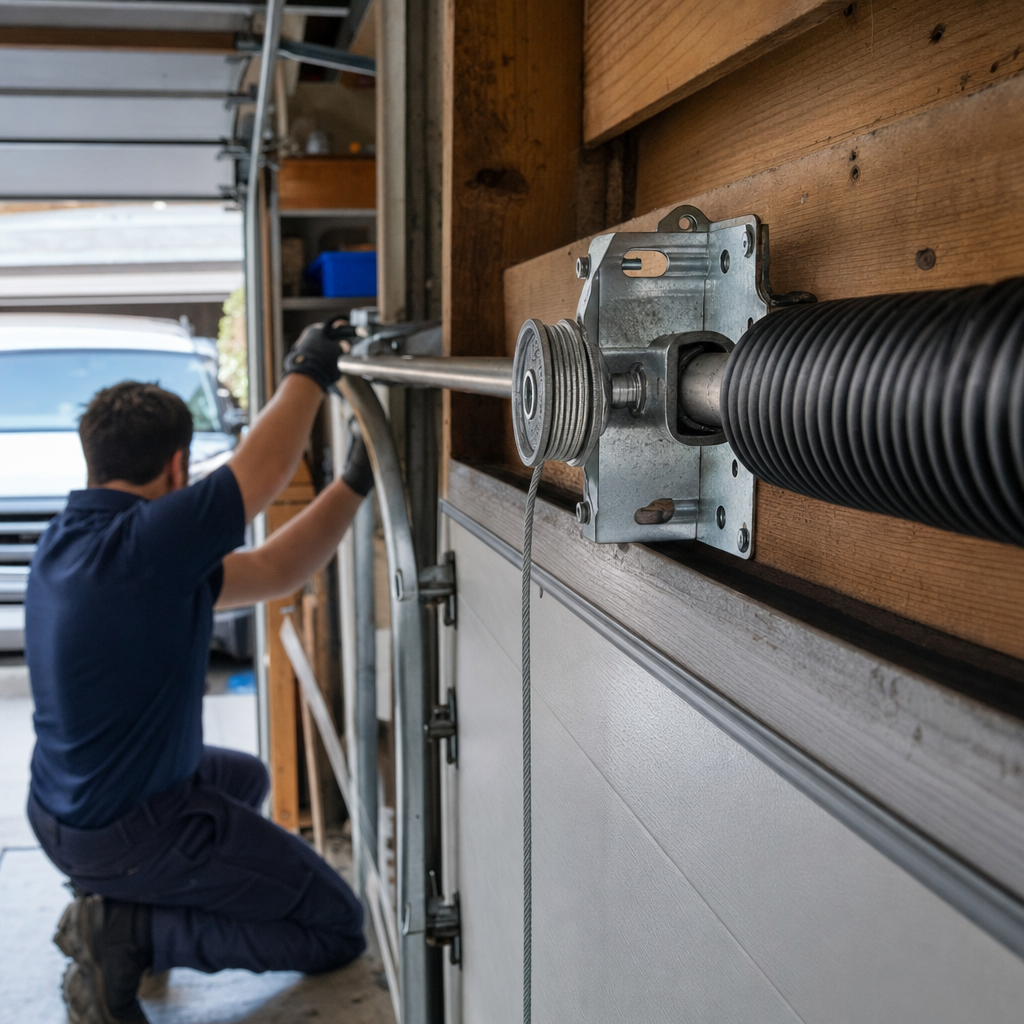
Garage Door Opener Installation in Akron, OH — What It Actually Takes in Older Garages
Finding a reliable Garage Door Opener Near Me in Akron, OH typically means paying $250–$550 for installation completed in one visit. For most homes built after 1980, that’s a straightforward job. But in Akron’s rubber-boom neighborhoods — Goodyear Heights, Firestone Park, North Hill — the same install can turn into a structural puzzle when a century-old garage slab has heaved and the header height doesn’t match what the opener manual assumes. Call (888) 763-4702 for a free on-site estimate; Daniel shows up personally to measure before quoting.
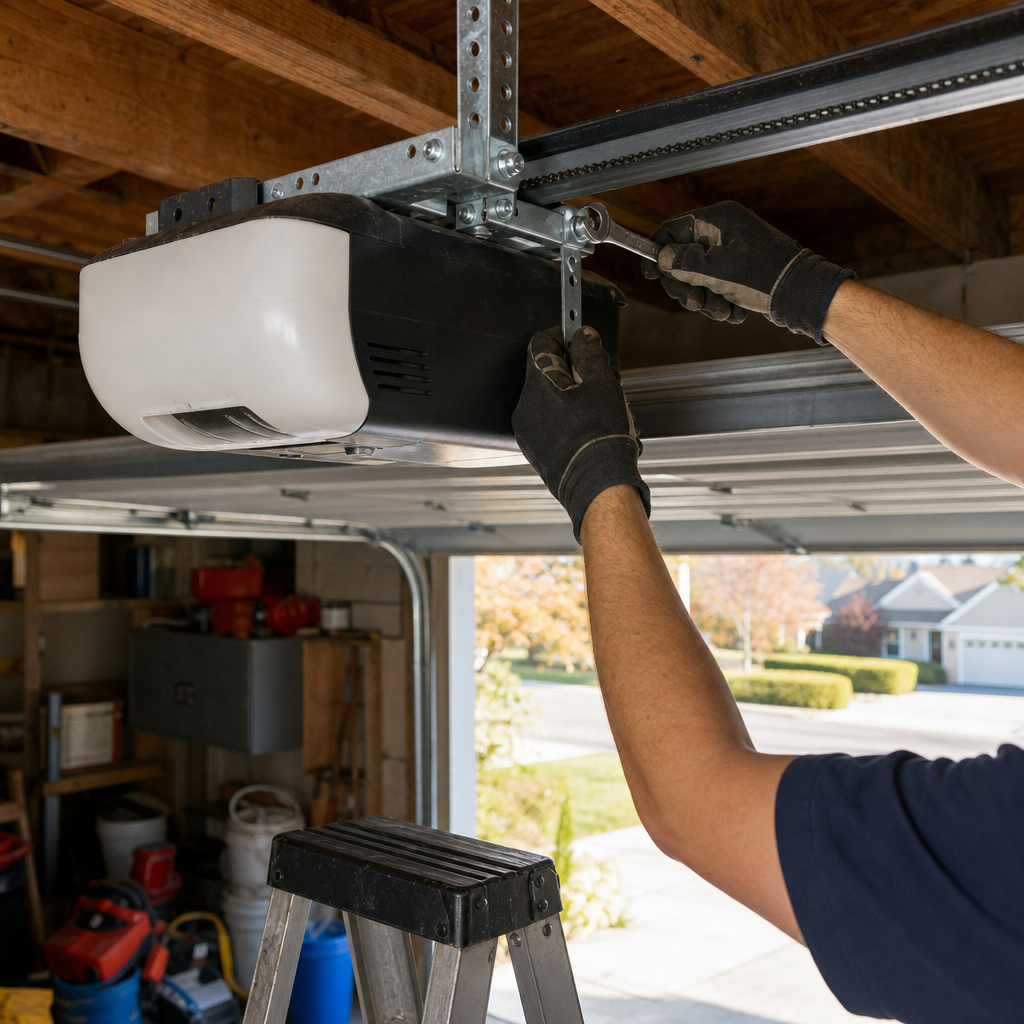
Here’s the reality we’ve learned after eight years of working on Akron garage doors: the Craftsman opener sitting in your Amazon cart — even if it’s rated the Best Garage Door Opener in Akron, OH for newer homes — was engineered for a 7-foot door on a level slab in a 2005 subdivision. If your garage went up during the rubber boom, that opener may not clear your header — and the install tech from the big box won’t know that until they’re already on the clock, billing by the hour for problems they didn’t anticipate.
We see this constantly in the older east and south sides of Akron, where detached single-car garages built in the 1910s–1920s sit on poured slabs that have shifted through decades of Ohio freeze-thaw. The door isn’t square at the slab level. The wood jambs have softened. The rough opening was never standardized. An opener installed on a racked door will trigger safety reversals constantly and burn out the motor within a season. That’s why we bring a level and shims before we touch the opener box.
Why Akron’s Older Garages Change the Opener Math
Akron sits in the Lake Erie snow belt, roughly 40 miles south of the lake, averaging around 47 inches of snowfall annually with some of the most frequent freeze-thaw cycling in Ohio. Temperatures cross 32°F roughly 50–60 times per year. That cycling doesn’t just fatigue torsion springs — it heaves and settles the concrete pads beneath century-old garages until the door frame is visibly out of plumb.
In Firestone Park last March, we arrived for what the homeowner assumed was a dead Genie opener. The real problem: the slab had pitched toward the alley by nearly two inches, racking the door so severely that the new opener’s safety sensors couldn’t maintain alignment. We leveled the tracks with a low-headroom bracket kit, reset the door on its hardware, then installed a LiftMaster belt-drive unit with a shorter rail assembly. The box-store installer who’d quoted them over the phone never mentioned the slab.
That job ran toward the upper end of our range because of the track work, but the homeowner understood exactly why — and the door still runs quiet six months later. If I wouldn’t put it on my own garage, I’m not putting it on yours.
Choosing the Right Opener Drive for Your Akron Garage
Most homeowners think the decision starts with horsepower. In Akron’s older housing stock, it starts with ceiling height and headroom. The three drive types each handle our local constraints differently:
- Chain drive: The most common, most durable, and loudest option. Fine for detached garages where noise doesn’t matter, but the rail assembly sits lowest — often a problem in garages with less than 12 inches of headroom. We install Craftsman and LiftMaster chain-drive units when the ceiling is high and the budget is tight.
- Belt drive: Quieter, smoother, with a slightly more compact rail profile. Ideal for attached garages in Kenmore or Wallhaven where bedrooms sit above or beside the door. The rubber-reinforced belt also handles minor vibration from a slightly uneven door better than chain. We spec LiftMaster and Chamberlain belt drives for most Akron retrofits.
- Direct drive (jackshaft): Mounts on the wall beside the door, not overhead. Eliminates headroom concerns entirely — a genuine solution for the 1920s garages in Goodyear Heights with 8-foot ceilings and sagging joists. Costs more upfront, but saves the structural headache. Daniel is trained on Wayne Dalton and Raynor jackshaft systems for these exact situations.
The wrong choice isn’t just noisy or slow — it’s a motor that strains against a door it wasn’t designed to pull, burning out in two years instead of fifteen.
Headroom, Low-Clearance Kits, and What They Cost
Standard opener installation assumes 12–15 inches of headroom — the distance from the top of the door opening to the nearest obstruction. In Akron’s worker-era garages, we regularly measure 8–10 inches, sometimes less where a previous homeowner added a header board or the joists have sagged.
When headroom is tight, we have two paths:
| Solution | What It Does | Typical Cost Added |
|---|---|---|
| Low-headroom bracket kit | Modifies track geometry so the door rolls closer to the ceiling, creating space for the opener rail | $80–$150 |
| Quick-turn bracket set | Replaces standard radius with a tighter curve; minimal headroom solution for steel doors | $60–$120 |
| Jackshaft (wall-mount) opener | Bypasses overhead rail entirely; mounts beside door on torsion shaft | $200–$400 additional |
These aren’t upsells — they’re structural necessities. We’ve had homeowners in North Hill call us back after a budget install left their opener rail scraping the door every cycle. The original installer hadn’t measured; they’d just hung the unit and left.
Our Garage Door Opener service page covers repair and maintenance for existing units. This page is specifically about the install process — and why Akron’s housing stock demands more than a standard hang-and-program approach.
The Slab-Level Alignment Check Every Install Needs
Here’s a detail almost no competitor mentions: we level the tracks before mounting the opener rail. Not after. Not “if there’s time.” Before.
An opener is essentially a motor pulling a door along a fixed path. If that path is twisted — because the slab heaved, because the jamb rotted, because a previous installer shimmed one side and not the other — the opener fights the door on every cycle. Safety reversals trigger falsely. The motor overheats. The trolley wears prematurely. The homeowner thinks they got a lemon opener; what they got was a correct opener on a crooked door.
Daniel checks this with a four-foot level on both vertical tracks and a string line across the header. If the door is racked, we tell the homeowner before quoting the opener. Sometimes the fix is shimming a jamb. Sometimes it’s a more involved track reset. Either way, the opener gets installed on a door that actually moves square — which is why our installs don’t generate callback complaints about “sensitive” safety sensors or “weak” motors.
Brand Compatibility: We Work on Your Equipment
Guardian is trained and equipped to work on eight major brands: LiftMaster, Chamberlain, Genie, Clopay, Amarr, Wayne Dalton, Craftsman, and Raynor. That matters for installation because we don’t default to whatever’s moving fastest at the distributor.
A heavy solid-wood door from a 1940s Akron bungalow needs a different opener than a modern insulated steel door. The weight class, the cycle frequency, the headroom constraints — these determine the right unit, not brand popularity. Daniel specs the motor based on what the door actually requires, then sources the appropriate model from our supplier in North Canton. We don’t stock a single “most popular” SKU and force it onto every job.
If you’ve already purchased an opener — say, a Craftsman unit on sale — we’ll install it correctly, including the alignment check and safety testing that the retailer’s contracted crew often skips. We’ll also walk you through How to Program Garage Door Opener? (Akron, OH) before we leave. But we’ll also tell you honestly if that unit’s rail length or horsepower rating is wrong for your door’s weight and headroom. Better to know before the box is open.
What the Install Actually Includes
Our standard opener installation in Akron covers:
- On-site measurement and headroom assessment
- Slab-level and track alignment check
- Opener assembly and rail mounting to structural framing (not just drywall)
- Trolley connection and door arm geometry set for smooth open/close
- Safety sensor alignment and obstruction testing
- Force-limit adjustment for door weight and spring condition
- Remote programming and wall-button installation
- Cleanup and walkthrough with the homeowner
Most installs take 2–3 hours. Same-day service is available for urgent situations — a door stuck open overnight, a failed opener leaving a car trapped inside, a security concern that can’t wait. Emergency garage door service is a core offering at Guardian, not an after-hours surcharge.
Garage Door Opener Installation Cost in Akron
Our pricing is upfront and tied to what your specific garage requires. Here’s the full range for opener work:
| Service | Price Range |
|---|---|
| Opener Installation (standard) | $250–$550 |
| Opener Repair | $120–$320 |
| Low-headroom bracket kit (if needed) | $80–$150 |
| Track Realignment | $120–$240 |
| Roller Replacement | $110–$220 |
| Spring Repair | $180–$340 |
| Cable Repair | $130–$250 |
The $250–$550 install range assumes standard headroom, a level slab, and no additional track or spring work. Older Akron garages often need the bracket kit or track adjustment, which we quote on-site after measurement — never over the phone based on a description.
Call (888) 763-4702 for an exact quote. Estimates are free, and Daniel shows up personally to assess what your specific garage actually needs.
FAQs
Garage door opener installation in Akron costs $250–$550 for a standard job, with older homes sometimes requiring low-headroom brackets or track realignment that adds $80–$240. We quote after measuring on-site — never from a phone description — because Akron’s century-old garages frequently have headroom or slab issues that change the scope. Call (888) 763-4702 for a free estimate.
Yes — same-day opener installation is available for urgent situations, and emergency service is a core offering at Guardian, not an after-hours upsell. If your door is stuck open, a car is trapped inside, or you have a security concern, call (888) 763-4702 and Daniel will prioritize getting there. Standard non-urgent installs are typically scheduled within 24–48 hours.
Opener repair runs $120–$320, so if the motor, circuit board, or gear assembly has failed in a unit under 10 years old, repair usually makes sense. But if your opener is pre-2010, lacks safety sensors, or has needed repeated repairs, a new install at $250–$550 is the better value — especially since modern units include battery backup, Wi-Fi connectivity, and force-limit technology that older openers can’t match. Daniel will diagnose honestly and tell you which path saves money long-term.
We install and service LiftMaster, Chamberlain, Genie, Craftsman, Wayne Dalton, Raynor, Clopay, and Amarr openers — covering virtually any residential unit a homeowner in Akron might have. If you’ve already purchased an opener, we’ll install it correctly with the alignment and safety testing that retail contracted crews often skip. We’ll also tell you honestly if the unit you bought is undersized or incompatible with your door’s weight or headroom.
Ready for a Door That Actually Works?
Don’t let a box-store installer learn about your garage’s quirks on your dime. Daniel Lopez, Owner & Lead Technician at Guardian Garage Door Repair Greater Akron, has spent eight years diagnosing the real problems behind opener failures in Summit County’s oldest neighborhoods — and he shows up personally, not a subcontractor you’ve never met. Call (888) 763-4702 today for a free on-site estimate. We’ll measure your headroom, check your slab, and quote the install that actually fits your garage.
Written by Daniel Lopez, Owner & Lead Technician at Guardian Garage Door Repair Greater Akron, serving Akron, OH.